The Function of Body Modification and Ornamentation in Two Polynesian and Two Amazonian Cultures
The body is the physical link between ourselves, our souls, and the outside world.
It is the medium through which we most directly project ourselves in social life;
our use and presentation of it say precise things about the society in which we live,
the degree of our integration within that society, and the controls which society
exerts over the inner man.
-Victoria Ebin, The Body Decorated
Body modification and ornamentation plays a role in many cultures the world over. It has been used in rites of passage, in the calling of spirits, and to enhance beauty (Krakow, 17). The adornment of the body takes many forms. It can be as moderate as body painting, hair styling, tattooing, scarification, and piercing, and as extreme as finger amputation and genital mutilation. The diversity of each culture's customs regarding body modification and the symbolism found therein reveals much about the people's philosophy and societal standards. In this study of four cultures-- the Maori and Samoans of Polynesia, and the Mehinaku and Kayapo of the Amazon-- body modification and adornment practices will be analyzed. I will examine the function of adornment in each society, differences between adornment of males and females, and use of body modification in rites of passage. I will also look at similarities among the practices and purposes of body decoration in the four cultures and possible reasons why such behavior is almost universal.
This paper was originally submitted for an Anthropology class and published online in 1996, I was able to retrieve it from the web archive here: https://web.archive.org/web/19961215203106/http://hamp.hampshire.edu/~tawF95/bodmodpap.html
The Function of Body Modification and Ornamentation in Two Polynesian and Two Amazonian Cultures
Theresa Wall, Hampshire College
The body is the physical link between ourselves, our souls, and the outside world. It is the medium through which we most directly project ourselves in social life; our use and presentation of it say precise things about the society in which we live, the degree of our integration within that society, and the controls which society exerts over the inner man.
-Victoria Ebin, The Body Decorated
INTRODUCTION
Body modification and ornamentation plays a role in many cultures the world over. It has been used in rites of passage, in the calling of spirits, and to enhance beauty (Krakow, 17). The adornment of the body takes many forms. It can be as moderate as body painting, hair styling, tattooing, scarification, and piercing, and as extreme as finger amputation and genital mutilation. The diversity of each culture's customs regarding body modification and the symbolism found therein reveals much about the people's philosophy and societal standards. In this study of four cultures-- the Maori and Samoans of Polynesia, and the Mehinaku and Kayapo of the Amazon-- body modification and adornment practices will be analyzed. I will examine the function of adornment in each society, differences between adornment of males and females, and use of body modification in rites of passage. I will also look at similarities among the practices and purposes of body decoration in the four cultures and possible reasons why such behavior is almost universal.
MAORI
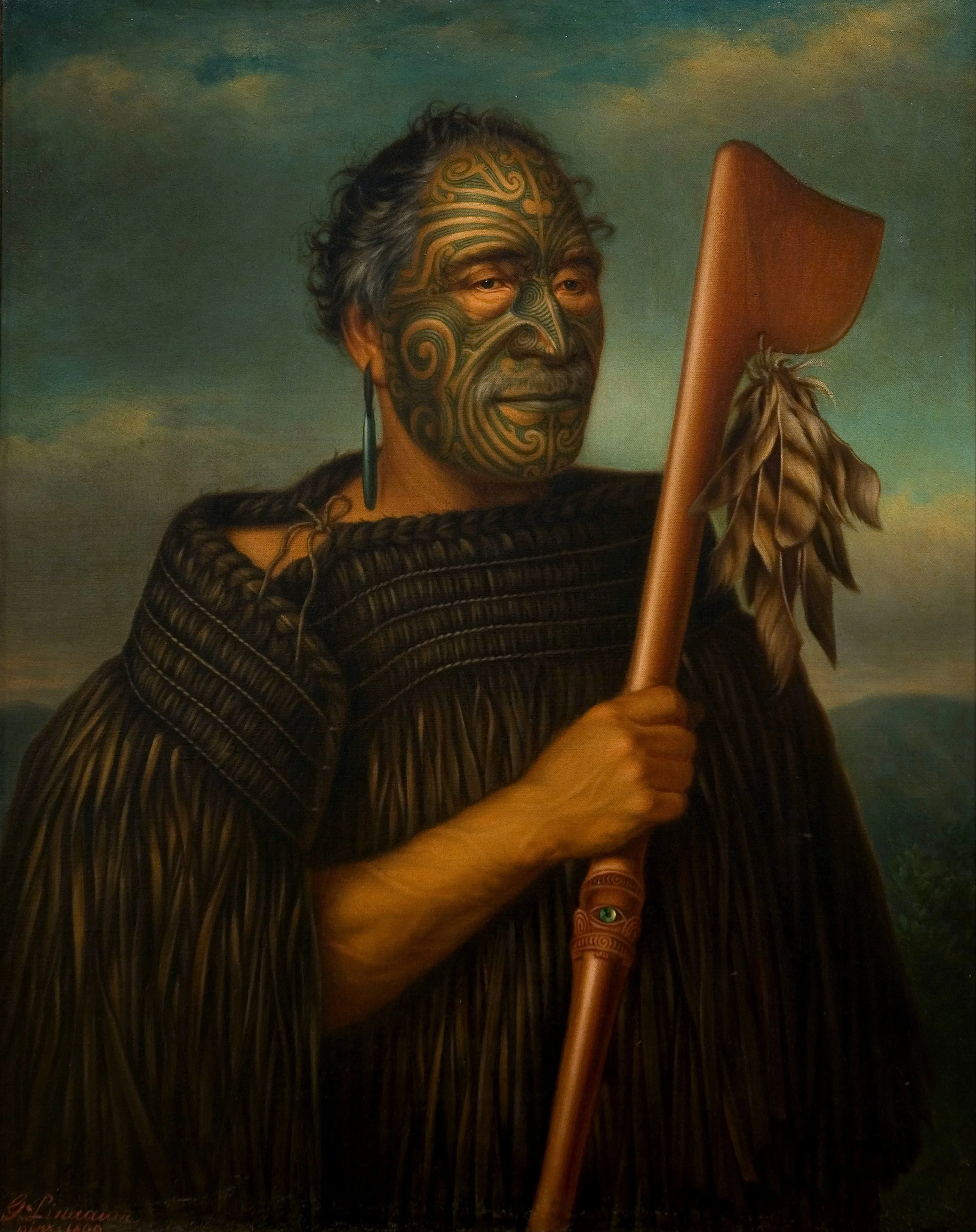
The Maori of New Zealand are well know for their beautiful art of moko, or tattooing. Anyone who could pay the tattooist got tattooed, and even those who could not afford the usually high prices of a master tattooist went to an amateur apprentice rather than be without decoration. It was believed that the tradition of moko began with Maori ancestors painting their faces with charcoal in preparation for battle, and eventually, instead of reapplying this makeup for each battle (the Maori were a very warlike people), they began to make the lines permanent (Robley, 2). Both men and women were tattooed, beginning at puberty (Robley, 44), and although there were many similarities regarding the placement and function of tattooing for both sexes, there was also much distinction between the two.
Female moko was generally confined to the chin and lips (Sanders, 148), although some were tattooed on other places on the face and some women were as tattooed as men (Robley, 33-4). The chin and lip moko were designed to attract a mate. It was considered to be the epitome of Maori beauty to have full blue lips (Robley, 33). The song that was sung as a young woman got tattooed depicted the attitude towards those who did not get tattooed. It tells of what would be said to a girl who goes to find a mate and does not have moko:
Lay thyself quietly down, oh daughter;
(soon it is done.)
That thy lips may be well tattooed;
('tis quickly performed.)
For thy going to visit the young men's houses;
Lest it be said
Whither indeed is this ugly woman going? Now
coming hitherward.
Keep thyself still, lying down, oh young lady,
(round the tap goes.)
That thy lips may be well tattooed,
Also thy chin;
That thou mayest be beautiful.
Thus it goes fast
For thy going to visit the houses of courtship,
Lest it should be said of thee,
Whither does this woman think of going with her red lips!
"Who is walking this way?"
(still it is revolving.)
Give thyself willingly to be tattooed;
Briefly it it over
For thy going to the house of amusement;
Also thou wilt be spoken of;
"Whither goes this woman with her bare lips,
Hastening hither, indeed, in that state?"
(round it revolves.)
It is done. It is tattooed.
(soon it is indeed.)
Give hither quietly thy chin to be imprinted;
(nimbly the hand moves.)
For thy going to the houses of the single men,
Lest these words be said-
"Whither goes this woman with her red chin,
Who is coming this way?" (Linnell, 24-5)
Because one of the most important parts of a girl's life was getting married and having children, it was critical that she made herself as eligible as possible. The facial moko was one way of doing this. Since moko also told about the bearer's rank, lineage, special skills and marriage status (Sanders, 148) it could also have been a way of advertising for a mate: a 'look how marrying me could benefit you.' Another part of the tradition of moko took place during funeral rites because moko was also characterized by indented scars: women were the "chief mourners at funerals" (Robley, 45), they cut their bodies with shells and rubbed moko dye into the wound, as a personal monument or in rememberance of the person (Robley, 45).
Men had much more leeway regarding where they were tattooed. They could be tattooed on the face, and as low as the knee, although only important men could get tattooed on their foreheads, upper lips, or chins, and priests could only get a "small patch of moko under the right eye" (Robley, 256). Getting moko was an unofficial test of one's manhood. Sir John Lubbock once said: "The process... is extremely painful, particularly on the lips, but to shrink from it or even to show any sign of suffering while undergoing the operation was considered unmanly" (Robley, 10). A man without moko was a papatea, a plain face, and was considered a nobody (Scutt and Gotch, 3). Male moko also served to attract a mate, which was again evident in the song that was sung while a man got his moko done. It discusses the girls who would be waiting for the tattoo to be done and how willing they would be to do favors for him afterwards, such as gathering food (Linnell, 24). The moko was also used to frighten the enemy in battle (Robley, 22) and to identify dead (decapitated, oftentimes) bodies (Robley, 23). The decapitated, embalmed heads of warriors who died in battle were often negotiation peices inthe aftermath of a war, while arrangements for peace where being made. It was a great tribute to a person to embalm his head after his death; whether death came in peace or war (Scutt and Gotch, 4), heads became family heirlooms.
With the influx of the white man and the susequent conquering of the various Maori tribes, the practice of moko significantly diminished. Men began to wear facial hair, which previously was never left to grow (Scutt and Gotch, 3), in order to cover up their facial tattoos. New generations ceased getting tattooed altogether. Parents had to order their children to get tattooed. Among girls, it was predominantly the mother or another female relative who demanded they "take the moko and the male relative who did not want it done (Sangl, 40), most likely in order to assimilate more easily. The practice of moko is now being revived by young Maori who are disappointed in the lack of knowledge about their heritage and are seeking to reinstate the lost traditions that make their people unique.
SAMOANS
Another Polynesian people who practiced body modification were the Samoans. All Samoan people were tattooed, with the exception of a few sacred virgins (Gell, 82) and rulers who had not been tattooed before they were consecrated (Mead, 80). Men and woman each had their own tattooing ceremonies and functions for the tattoos.
Young males began acquiring tattoos between the ages of 12 and 15 (Gell, 51), before which they were separated into a group of untitled men, the aumaga (Mead, 79). O le tatau or tattoing, was presided over by two female dieties: Taema and Titafaiga (Gell, 51). It was said that before the siamese twin goddesses swam to Samoa to teach the art of tattoing, they had been told to sing 'Tattoo the women, don't tattoo the men' on the way there, but they got distracted on the way and arrived singing 'Tattoo the men, dont tattoo the women' (Gell, 66). This explains why only males recieve tatau and not women.
Although all males were tattooed, the tattooing of the son of a chief was an exceptionally elaborate event. It brought the entire community together for a big festival; family gathered in the village, and many outsiders came to share in the festivities. The first night these people who would be entertained with a large feast, a sham fight, wrestling, boxing, and dancing. Then the tattooist would be paid the first part of his fee. The next day the tattooing would begin. In addition to the chief's son, many other youths would be tattooed in order to share the ordeal of the young leader. The process would take days, sometimes many months to complete, depending on the pain tolerance of those being tattooed (Gell, 53). When the tattooing was finally completed the O le Lulu'unga-o-le-tatau, or "the sprinkling of the tattooed" (Gell, 53), was performed. The tattooist, members of the community and family, and the newly tattooed boys took lit torches to the malae, or temple enclosure, and after a series of ritual movements and gestures the torches were all extinguished together. Next, a bottle of water was smashed at the feet of the chief's son and the torches were relit. This was followed by a search for the bottle's cork, which if not found, foreboded the death of one of the newly tattooed youths (Gell, 53). The last day all the newly tattooed had the Lulu'u performed over them by the tattooist, who doubled as a sort of priest. He sprinkled water on them "to remove what was considered to be a kind of sacredness attaching to those newly tattooed" (Gell, 53) in order for them to be accepted back into society as men.
The tatau and the ceremony surrounding it had many functions in Samoan society. First it was the initiation of a boy into a man's world. Although it was not officially an initiation, the ceremony follows the same pattern of most initiation ceremonies: the seclusion of pre-adult males, an ordeal or mutilation of the body to show maturity, a simulated death, and integration back into society as a man (Gell, 56). Tattooing also instills "in young men an ethos of violence... the capacity and disposition to meet force with force, and to overcome" (Gell, 58). The song that was sung while the boys were tattooed demonstrates that war and tattooing were intrinsically connected:
O Fi Filelei, like a necklace of whale's teeth
Aid us when we get ready for war
And Tofou, descended from the gods, aid us
Adorn us with your victories (Gell, 57)
It was thought that as it was sung it would be absorbed into the body along with the ink and become a part of the boy. Tattoos were a part of the Samoan psychological warfare as it was with the Maori. They were intended to scare the enemy, especially when the grotesque gesturing that occurred before and during the battle was added. It also had a practical use in battle, similar again to the Maori, which was to identify the slain (Gell, 57). Gell also interpreted the grand ceremony and festival associated with tattooing to have much political importance, by bringing the community together, as well as being conditioning psychologically, that is to say, to introduce the boys into a world where they must be able to endure great amounts of pain and in which they must become strong warriors, but to indoctrinate them into always obeying their superior, the chief (Gell, 54).
Female tattooing was not quite as complicated in regards to function, but was more intricate in its symbolism. Female malu, or tattooing, was different from tatau in both design and placement. While male tatau was asymmetrical and covered much of the flesh, the women's malu was very symmetrical and was sparse (Mead, 80) on the hands, arms, legs, and above the groin (Mead, 78). The malu was named after the essential component of the tattoo: an elongated diamond or lozenge on the indent behind the knee (Gell, 84). It was considered shameful to appear in public with out a malu because it was immodest (Gell, 85). Gell suggests that the back of the knee was a "secondary crotch" and the malu was representative of the vulva, which suggests it would be considered erotic, but because it was forever impenetrable, it placed her virginity beyond any man's reach (Gell, 85). It seemed to display a girl's virginity when she was young, which may have been why it would have been shameful not to wear it, as it would insinuate the girl was not a virginal creature; it also might be a reminder or a tribute to a woman's lost virginity once she was married, and would make her an eternal virgin, never "despoiled," never used."
One more form of tattooing among the Samoans was a form of punishment. It was the tattooing of the nose, which was the only facial tattoo used, and was used for both men and women (Mead, 78). Although there was not as much information on this particular tattoo, it seems as though it is an important note that there was a specific tattoo used for punishment in this society.
Gell believes that as the whit man began to encroach on Samoan territory, at least for a time, young males "would have sough to become tattooed in the belief that this had a direct influence on their prowess as warriors" (Gell, 57). This statement, however, only seems to deal with the period in which the Samoans fought the white colonists, but most likely did not hold true for later generations. Weyer states that during the first nine years of the inhabitation of Samoa by missionaries "the tattooing which... made a naked man look almost dressed began to disappear" (Weyer, 281) and even the women's tattooing was replaced by the calico dress as Samoa became "civilized" (Weyer, 282).
MEHINAKU
The Mehinaku of the Upper Xingu in the Amazon employed many forms of body modification. The most prominent was the use of body paint. As with the two previous cultures, men and women had their own customs regarding body ornamentation, but there were also many similarities regarding symbolism and function.
"Getting dressed," especially for important ceremonies and festivals, was a very social activity among the Mehinaku. It was considered proper todress with others, which was also very practical as it wsa nearly impossible to pain oneself (Gregor 1977, 155). The process of readying oneself fro an event may have taken up to two hours and began with covering the body with imi and mauwayepe for the men (Gregor 1977, 172). This was believed to keep teh body supple and prevent breakage of bones. Charcoal was then painted on as a background, and the yucu (urucu dye) was drawn on by hand or with a narrow wooden tool (Gregor 1977, 161). Yucu was a "social pigment [which] symbolizes willingness to engage in interaction"; if a person was not inclined to be sociable, he did not wear the yucu dye (Gregor 1977, 159). This symbolism also held true for the use of red pigment by the women (Gregor 1977, 175-6), although they only used yucu to decorate their forehead and below the knees (Gregor 1977, 165), they had their own red dye called epitsiri (Gregor 1977, 170-2). The use of red dye to enhance one's beauty and to appear sexually attractive was the same for both men and women (Gregor 1977, 158): "A man who might be indifferent to an unpainted and beltless woman suddenly finds she is of sexual interest when she paints up" (Gregor 1985, 47).
Because the function of ornamentation and decoration was to"tell their fellow actors where they stand with respect to the roles they perform" (Gregor 1977, 176), it was sensible for the males to have a more complex selection of designs than their female counterparts. Males spent the majority of their time in the public domain and therefore had "more to communicate" (Gregor 1977, 166) and women remained in the prive realm except when they had a specific purpose for being in the public realm, for which they had to attire themselves properly (Gregor 1977, 165). These designs or yana distinguished social class. For example, among men, only a shaman could wear the tukupala or fish design because it was created by the sun who was a great shaman. The ui or snake design was worn by the young men, and the mahulalopa, or armadillo, could only be worn by champion wrestlers. In addition to these distinguishing designs, there were also designs for the common man, including the yanomaka ipute, which could be any number of tail designs of different animals, which were painted on the back and thighs (Gregor 1977, 174-5). The women had their own designs: the diamond kulapei on the back of legs and a polka-dot design on the arms (Gregor 1977, 165); they also shared the walama, or anaconda design, with the champion wrestlers, although women only wore it on the backs of their legs and it did not have the same meaning as it did for wrestlers (Gregor 1977, 175-6).
Men also painted their bowl cut hair with yucu (Gregor 1977, 160-1). These designs also were associated with social roles: the shaman again wore a design created by the sun, called bajua; children were decorated with anapi; young men who had recently emerged from puberty seclusion were painted with the kajakupei design; other men wore temepyana (tapir design), pyuluma etewe (pirana teeth), or ; while such men of status as champion wrestlers wore the kulapei design of (Gregor 1977, 172-3).
A procedure that was unique to female chiefs was the tattooing of the back, legs, and shoulders with parallel lines, called hipyulai. It would seem as if this painful manner of permanent decoration would demonstrate to the community that the woman was capable of holding a traditionally male position (Gregor 1977, 174).
A large part of the initiation of a boy into manhood was the ear piercing ritual, or pihika, which was "one of the hallmarks of Xingu masculine status" (Gregor 1985, 186). This ritual was prepared for by taking medicines and abstaining from food in order to aquire the strength that was needed to become a man. When the day arrived, the boys were carried to the front of the men's house and held by their sponsors. The piercer attacked them and quickly pierced their ears, and the boys, who were considered jatsa (age mates), were carried into a house that had been set up especially for the month of seclusion that followed (Gregor 1985, 186). They were given their first pair of tulunti (feather earrings), made from parrot and toucan feathers that were meant to give them the strength required to enter adulthood (Gregor 1985, 49). During seclusion the boys were repeatedly visited by male relatives who scarred them with a fish tooth scraper called a piya on the arms, torso, and legss in order to increase the boys strength. "The pain of the piya scarifier had to be born with dignity, for becoming a man is a painful process" (Gregor 1977, 228). This ceremony was the male equivalent to the female ceremony for first menses in both actions and symbolism. Both rituals focus on the flow of blood and seek to stop it as soon as possible; the seclusion of the initiates was also the same (Gregor 1985, 188) and both aim to prepare the young adult for life in the community as an adult. Those in the transitional stages of life, such as in seclusion for initiation go without decoration, to signify being on the outskirts of the social world, without any place in society (Gregor 1977, 174-5).
Another rite of passage in which ornament and decoration is important was on the occasion of the death of a spouse. The survivor must then shave his or her head and remain out of society in a period of mourning for the amount of time it took for the hair to resume its normal length, which could have been up to a year (Gregor 1977, 286).
KAYAPO
The Kayapo, also of the Amazon, used scarification (Meggers, 77), ornaments for pierced lips, ears, and noses (Carmichael, 30), body paint and different hair styles (Turner, 97) to distinguish social and age classes, as well as to adorn themselves for potential mates. This decoration began in infancy, before the child was introduced to the members of the community, within minutes of its birth. It was painted with red and black designs and bangs were cut in its hair (Meggers, 74). A few days later the infant's ears were pierced and wooden earplugs, reddened to aid in the child's growth and to give it strength, were placed in the new holes; at this time a male child's lip was also pierced and a string of beads or a narrow dowel was inserted in preparation for an adult lip plug (Turner, 97). From the age of three, children were painted with black geometric designs which were repainted every ten days (Meggers, 74) at this time the child was weaned and stripped of their infant earplugs and their hair was cut short. The boy was now less likely to be painted with the intricate designs of women and would be painted with broad bands by men (Turner, 98, 101). At the age of eight childhood ended and a boy would be ceremonially removed from his mother's house to live in the men's house, and was painted solid black. From that point on he would only be painted by men with the exception of a few special ceremonies (Turner, 98), where his sister would paint him (Meggers, 73). Girls at this point began learning the art of body painting along with the other womanly tasks they would be required to know for adulthood (Meggers, 74). Puberty again marked a time of change for both sexes. A boy was given a small version of an adult lip plug to replace the string of beads from infancy and he was allowed to let his hair grow, which was a symbol of strength and sexual power (Turner, 98,100). Girls became "black-thighed ones"-- named after the broad black stripes that would now be painted on their thighs, breasts, and upper arms-- to signal their availability as mates and their readiness for childbirth (Turner, 102). "Bachelor Youths" were those who had proven themselves to be men and who were now available to mate. Their small lip plug was now replaced with an adult lip plug (Turner, 100), which demonstrated their sexual assertiveness (Turner, 100-1) and their oral aggressiveness (Gregor 1977, 153-4).
As has been demonstrated in the initiation rites of the Kayapo youth, "the most widespread and elaborate form of body decoration is painting" (Carmichael, 29-30). Only two colors were primarily use: black and red, although white did occur rarely. These two colors had specific symbolic meanings and when applied to their respective areas on the body, described social status and possibly the bearer's state of being. Black pigment, or tuk, means death or death village, and showed that the bearer was in a transitional state; it was applied to the trunk of the body and upper limbs, as well as square cheek patches, and bands across the forehead: this was the biological part of the body (Turner, 103). Black was painted on the biological parts of the body because black paint transcended the "boundary between the individual and society [the skin] and thus reaffirms the mutual integration of the two" (Turner, 104). Red was painted onto the extremities and over the black pigment on the trunk: the sensory and intelligent parts of the body, "whose socialization has been asserted by the black designs" (Turner, 104). Red energized these parts and added to their sensitivity (Turner, 103) as well as giving protection against the spirits (Meggers, 77). As stated before, white was rarely used, but when it was, it represented purity or terminal death: the nothingness after the death village (Turner, 103).
Scarification was also used. The first ritual in which it was used was part of a purification ritual performed by a man who has just killed an enemy. The ritual involved dietary taboos, confinement to the men's house, and "chest scarification in the form of a large V extending from shoulders to navel" (Meggers, 77). The other ritual use of scarification involved funeral rites for a man: the female members of the man's family would wail and cut themselves, which in some cases caused their own death. The widow shaved her head and would not remarry or participate in ceremonies and dances until the hair was regrown to an acceptable length (Meggers, 76).
CONCLUSIONS
One of the most significant similarities among these four cultures is the use of body modification to define people in relation to the community in which they live. Moko described social rank, lineage, special skills, any honorable acts the bearer had committed, and the person's relationships: their clan or marriage status (Sanders, 148). Among the Samoans some designs showed "political allegiances and generational distinctions: 'certain districts [had] what may be called coat of arms... and each generation [had] some particular trifling variation,'" but there was not acknowledgement of rank (Gell, 56). Terence Turner stated in The Hidden Peoples of the Amazon, that among the Kayapo "The decoration of the surface of the body serves as a symbolic link between the 'inner man' and some of his society's most important values" (Carmichael, 27). Each stage of life was marked by different rules regarding ornamentation. In the Upper Xingu, Mehinaku adornment "is a statement about the public demonstration of one's mood and intentions concerning interaction among the community at that time (Gregor 1977, 158). The design also communicated one's status within the group: whether the person was a shaman or a young man (Gregor 1977, 172-5). The use of ornamentation to distinguish between those of low and high birth could prevent one person from offending another of higher status by not acknowledging his superiority or to prevent the fabrication of a higher identity by one of lower birth. If a person's status was out for everyone to see there could be no miscommunications regarding place in the hierarchy.
Because "the best way of proving to one's self and to others that one is a member of a certain group is to place a distinctive mark on the body" (Durkheim, 265)-- body modification was viewed as an intricate part of rites of passage within these groups. Its role could begin in infancy with the introduction of the baby into society, as it did in the Kayapo culture, or it could have been part of puberty rites, as it was in all four cultures. It also aided in finding a mate by conforming to the standards of beauty in society; this begins the next stage in life: adulthood and parenthood. It was also a part of the rites of passage at the end of life. Women frequently scarred themselves as a lifelong reminder of the deceased during the funeral rites of both the Maori and Kayapo. These physical changes signified changes in social standing and began a new era in the bearer's life. Many people also felt the decoration of the body not only announced changes in one's life, but may even summon those changes.
Body modification and ornamentation practices may be found in every culture on might analyze because of the "extreme male concern with physical attractiveness in a spouse" (Wright, 65). For the Maori, Samoans, Kayapo, and Mehinaku, one of the main purposes of female body modification and ornamentation was to make them appear beautiful to the males of their community. Typically beauty is associated with youth and therefore fertility, which would be attractive to a man who must find a woman with whom to continue his genetic line (Wright, 65). The more beautiful the girl looks, the more suitors she might have. This gives her more of a choice as to whom she would mate with, which is beneficial for her because the more superior her mate is the better the chance her offspring have of surviving to adulthood. Many times female body decoration also shows status, including her skills, wealth, and sexual availability. This might also attract more potential mattes who would view her status as worthy of their own and the status of their offspring.
Male body modification and ornamentation could also be looked upon this way. In all four cultures, male decoration shows the bearer's status in society. It advertised to a possible mate and her family the man's worth. If the decoration was caused by a painful ordeal it might show that he would be a good provider and protector for a family because in many places it was thought the ordeal added strength to the initiate (Gregor 1985, 49) and made him a more vicious warrior (Gell, 58). This would be very important for any offspring as it would give them more of a chance for survival and more opportunities to pass down their parents' genetic lines (Wright, 65).
As each culture was 'modernized' their ideals of beauty changed. In order to be accepted and be functional within Western society, native people had to alter their standards of beauty. Many times this change in physical ideals was forced upon them by Christian missionaries. The missionaries viewed boyd modification adornment practices as heathen religious rituals, and because they were determined to Christianize the native people they would not allow their 'charges' to take part in what they considered sinful activity. Because of this attitude, many of these practices are no longer a part of the culture. This loss of tradition is unfortunate because we have learned this deprivation is quite detrimental to all cultures.
REFERENCES
Carmichael, E.; Hugh-Jones, S.; Moser, B.; Tayler, D. The Hidden Peoples of the Amazon. British Museum Publications Ltd.: London, 1985.
Durkheim, Emile. The Elementary Forms of Religious Life. The Free Press: New York, 1915.
Ebin, Victoria. The Body Decorated. Thames and Hudson: London, 1979.
Gell, Alfred. Wrapping in Images; Tattooing in Poylynesia. Clarendon Press: Oxford, 1993.
Gregor, Thomas. Mehinaku: The Drama of Daily Life in a Brazilian Indian Village. The University of Chicago Press: Chicago, 1977.
Gregor, Thomas. Anxious Pleasures: The Sexual Lives of an Amazonian People. The University of chicago Press: Chigago, 1985.
Krakow, Amy. The Total Tattoo Book. Warner Books: New York, 1994.
Linnell, Bruce. "Maori Moko: The Traditional Tattoo Art of New Zealand." Tattoo January 1996: 21-29.
Mead, Margaret. An Inquiry into the Question of Cultural Stability in Polynesia. Columbia University Press: New York, 1928.
Meggers, Betty J. Amazonia: Man and Culture in a Counterfeit Paradise. Aldine * Atherton, Inc.: Chicago, 1971.
Robley, Major-General. Moko; or Maori Tattooing. Chapman and Hall, Ltd.: London, 1896.
Sanders, Clinton R. "Memorial Decoration: Women, Tattooing, and the Meanings of Body Alteration." Michigan Quarterly Review v.30 n.1 1991: 146-157.
Sangl, Harry. The Blue Privilege: The Last Tattooed Maori Women. Richards Publishing: Auckland, 1980.
Scutt, R.W.B. and Gotch, Christopher. Art, Sex, and Symbol: The Mystery of Tattooing. A.S. Barnes: New York, 1974. [Note: I actually got this on the Internet, but I dont know the address. This is why the pages I have down do not match up with the acutal book pages.]
Turner, Terence S. "Cosmetics: The Language of Bodily Adornment." Conformity and Conflict. Little, Brown, and Company: Boston, 1971: 96-105.
Weyer, Edward Jr. Primitive Peoples Today. Doubleday & Company: Garden City, 1959.
Wright, Robert. The Moral Animal; Why We Are The Way We Are. Vintage Books: New York, 1994.
The image in the thumbnail is By Gottfried Lindauer - 5QG8fzo0FBl_hQ at Google Cultural Institute maximum zoom level, Public Domain, https://commons.wikimedia.org/w/index.php?curid=22007400
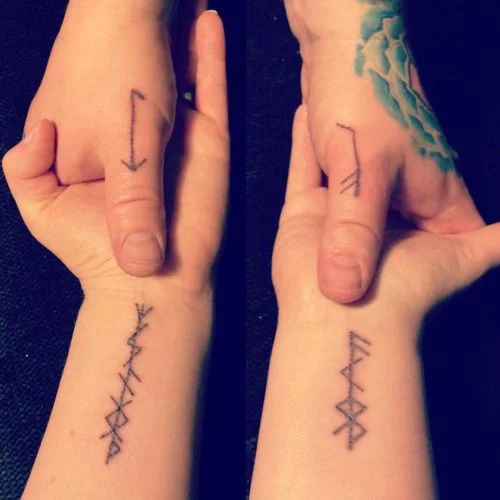
Body Modification and Contemporary American Rites of Passage
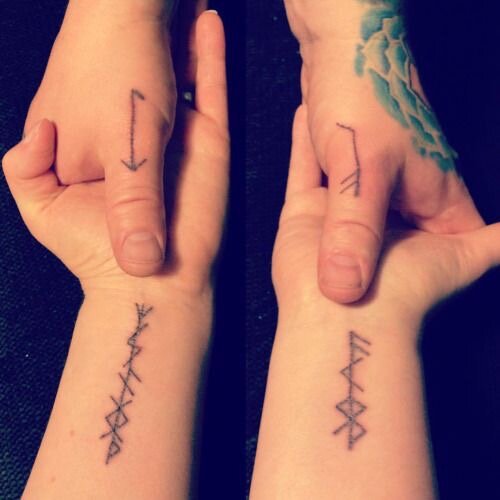
The following was a paper I wrote 22 years ago, submitted Sept 14,1997, while I was attending Hampshire College in Amherst, Ma. I have recently been going back through my original research and studies into Body Modification from an Anthropological perspective. I am going to start posting these papers as I am able to transcribe them or retrieve them from my old Zip discs. Stay tuned for more over the coming months, as well as new writings on the subject.
Introduction
Rites of Passage
The term “Rites of Passage” describes any rite or ritual which marks or induces a change in an individual’s social ppposition. These life changes include birth, puberty, initiation into social and familial groups, marriage, pregancy, childbirth and death. In most pre-industrial societies these rituals are the keys to determining the social hierarchy of the community.
In societies emphasizing technology, where life is based on individual achievement and is less dependent on communal cooperation for prosperity, such rites have become increasingly inconsequential to mainstream social life. This divergence may also be the result of a lack of a single set of spiritual beliefs within the society. For example, because there are so many belief systems in North America, there are no culturally universal rites of passage. While some pseudo rites of passage do exist, including receiving a driver’s license, going to a High School prom, and graduating from High School or College, these “rites” are not all-inclusive and are not necessarily required for participation in society.
Arnold Van Gennep’s metaphorical description of society as “a house divided into rooms and corridors” (Van Gennep, 26) may also aid in explaining why our more complex society lacks the rites of passage that are so crucial to smaller and less complex societies. He explains that the more complex the society, “the thinner are its internal partitions, and the wider and more open are its doors of communication. In a semi-civilized society, on on the other hand, sections are carefully isolated, and passage from one to another must be made through formalities and ceremonies” (Van Gennep, 26).
In our society, everyone is steadily exposed to people of various cultural and social backgrounds who are part of the same general community. In addition, there is a large amount of public space (that is, land or buildings that are not open exclusively to a single social or cultural group or family). Because of these and other circumstances unique to our social world, complete cultural isolation is nearly impossible. Isolation seems to be especially impractical when one must acquire food and clothing, and obtain a culturally acceptable amount of education.
Because the hierarchy in our society is based primarily on monetary and vocational achievements, and rites of passage no longer play a role in the determination of an individual’s social standing, the rite of passage has evolved primarily into a testimonial, recording important events in life as defined by the individual. Some rites of passage, e.g. birth, marriage, and funeral rites, still exist which change one’s social position, but their performance varies depending on people’s spiritual beliefs. Because contemporary rites of passage have become extremely personalized, there really can be no culturally universal rites of passage.
Body Modification and Rites of Passage
In a number of pre-industrial societies modification of the physical body demonstrates changes in the social or spiritual body. In some cases these physical changes are thought to actually create such spiritual and social alterations. In today’s society, body modification also plays a part in the rites of passage created by certain individuals. Not all individuals who chose to modify their bodies do so for this reason, and many do not consciously modify their bodies as a rite of passage.
My interest in the motives of individuals who modify their bodies, especially in cases where the modification may not be culturally acceptable has led me to explore websites containing essays describing personal experiences of body modifiers. There I have found evidence that many people consciously or unconsciously modify their bodies to mark the advent or conclusion of important events and times of their life. Through my internet research and use of sources such as interviews, articles found in periodicals, and books on popular culture, I have discovered quite a range of circumstances which lead individuals to mark their bodies in contemporary rites of passage. Circumstances range from children deciding what their hair styles will be for the first time or a parent allowing a child to get their ears pierced in elementary school, through modifications made by the individual to demonstrate their adult status. Circumstances also include the marking of the body as a person leaves behind a particularly difficult part of life in order to substantiate the personal strength and growth that was gained through the experience. Because each rite of passage is highly individualized and each situation is different, there will not be complete correlation with each event that I perceive to be a rite of passage. However, because they all contain the important element of alteration of the body, they are comparable enough to document the use of body modification in contemporary rites of passage.
Body Modification and Commemoration
The most obvious use of body modification in rites of passage is to mark the body with a permanent reminder of an important event or stage in and individual’s life. Tom Brazda, owner of Stainless Studios in Toronto, explained this when he was interviewed by Raven Rowenchilde: “‘Adornment connects you to the internal images,’ says Tom, ‘Like a doorway to the self. Piercing and tattooing helps to release energy,’ which he says helps the memory to be stored in the body” (Rowenchilde, 3). Because individuals see the decorations on their bodies every day which commemorate important times in their lives, they will never forget it, and will also probably never for get how these times felt to them. Because this is such a strong reminder, many individuals choose to mark themselves as a reminder of times of their lives to which they hope never to return. In one article on the internet entitled Modern Primitives, there is a story of a woman named Elizabeth, who had been in an abusive relationship for about a year. Discussing the time when she finally escaped from the relationship, she says:
Emerging from that, I saw myself as a warrior, but I had no lasting
battle wound that would serve me as a reminder of what I had been
through. My nose piercing is my wound, and I feel that is has
allowed me the strength to move forward away from the pattern of abuse.
(Modern Primitives, 2)
I have found this story to be a very common one. In a conversation I recorded with a friend, in March 1997, she discussed a similar reason behind a self-cutting she had done:
I know that when I cut myself last year it was because I wanted to
remind myself of something I did wrong and every time, and this
is when I cut myself with M, too, like two years ago, I wanted to
remind myself how awful I was, and what I did wrong, and the
pain will always remind me and the scar will always remind me
of that, and so I will never do it again.
(March 1997)
Sander Thomas explains the popularity of the use of body modification in rites of passage such as this one as a “means of spiritual, mental, and emotional cleansing.” He says that “the idea of voluntary pain induction as a spiritual ritual is highly cathartic and often symbolizes the death of an unpleasant memory or part of one’s’ life” (Thomas, 3)
While some of these modifications mark bad times in an individual’s life, many mark events that are not negative. Many women get their labia pierced after childbirth, or get their nipples pierced after weaning their baby from breastfeeding (Rowenchilde, 2). One woman in James McAlexander and John Schouten’s study of hairstyles, spoke of her change in hairstyles with regard to dating experiences:
Every time I start going out with a guy he always wants me to
grow my hair out. So I do. Then when we break up the first
thing I do is to cut it all back off.
(McAlexander and Shouten, 60)
She used her haircut to state her independence from the past relation and to aid her in moving on to future prospects. Short hair is commonly a renunciation of sexuality, and this idea follows with the pattern of growing her hair back out to demonstrate her new status as involved with a new love interest.
Some people mark their bodies in a rite of passage because they need to “move on to a higher plane of existence” (Gargulinski, 2). It does not mark any event in particular, but it is hoped that the ritual will begin a new period of the individual’s life.
Essentially, these marks tell the story of the individual’s life. As one author wrote in an essay found online: “I chose to scar my body, not because I hate it but because I love it. The experience helped me to connect to myself and it reminded me who I am and what I’m capable of” (Jyni, 1). Another woman said “‘My tattoos reflect who I am and where I’ve been. I’m a hundred percent me, I just wear it on the outside’” (Modern Primitives, 3). The people that mark their bodies in this way are not only reminding me of what the marks symbolize, but also the experience of receiving the marks, which makes the memories that much stronger.
Because of the powerful nature of the experience, many people also use it as a way to memorialize the loss of loved ones in a pseudo funeral rite. In one article I found online the author writes of the loss of a very close friend to cancer. She felt that she needed to keep a part of her friend with her, so she decided to get a tattoo in her memory. She spent a long time searching for a symbol or design that would be “worthy” of her friend and finally decided on a Celtic symbol called the triskelle, a symbol of life, death, and rebirth. She discusses the actual day she received the tattoo:
Getting the actual tattoo was more of a ‘spiritual’ experience than
any of my other tattoos or piercings. I went with another girl who
had been a close friend of Carol’s and spent a few hours before
the appointment talking about our memories of Carol. While
having the the tattoo done I found myself in an almost meditative
state. I felt very quiet and at peace, I never felt any of the light-
headedness that I have had at other times. It seemed to take a
very short time, and when it was done I felt very happy with the
results... It has given me great pleasure to remember my friend
in a way that is now a part of me.
(Memorial..., 1)
This is actually a very common story; I found many on the internet. Another particularly moving story was from a man whose brother died from alcoholism and drug addiction. He brought his brother’s ashes on a bicycling trip he had been meaning to go on when his brother was alive, and felt as though his brother was “watching” his back throughout the trip. When he returned home he got a tattoo in memory of his brother, using some of his brother’s ashes in the inks to create the shading in the design. He will truly carry his brother around with him for the rest of his life (He Ain’s Heavy..., 1). The experience of receiving a tattoo and the permanence of the design seems to be a very powerful, spiritual way in which to immortalize loved ones and to honor their memory.
Body Modification and Issues of Control
Another use of body modification in rites of passage is as an instigator of change in an individual’s life. These modifications aid the person in achieving a new sense of self and a new perspective on life. One of the most common examples of body modification being used as a catalyst is when someone is trying to gain control over his or her life.
The body has been used for centuries as a place upon which demonstrations for control of the individual by those in authoritative positions have been played out. The tattooing of criminals in medieval Japan and in Russian prisons are two examples of this type of confrontation. The government’s message to the prisoner and to everyone who may see the marks is “‘Your body belongs to us. We can do this to you, too.’” (Trachtenberg, 163-164).
This struggle for control often takes place between parents and children as the later mature and begin to desire more personal control. Often the body is used as a gauge for who has control. This conflict generally begins very young, perhaps in elementary school, when children decide for the first time how they would like their hair cut. It is also around that age that children first begin to chose their own clothing. These events are very important in a child’s life and can affect parent-child relationships for many years, depending on how parents deal with their children’s desire to choose for themselves.
In a study in the lat 1980s entitled “Hair Style Changes as Transition Markers,” James H. McAlexander and John W. Shouten discuss the issues of parental control and children’s decisions to decide on their own hair style. If a parent does not approve of a child’s hair style decisions it could cause great amounts of stress and be the source of may conflicts (McAlexander and Shouten, 58-59). An example of this type of conflict is a story an acquaintance of mine related to me a few weeks ago concerning the time he was forced out of his parental home. He had his hair cut so it was long on the top, but shaved in the back and on the sides. When his father saw his new hair style, he was immediately asked to leave the house. This hair style and his refusal to change it to something more acceptable to his parents forced him into the next stage of his life: independence from his parents.
The issue of personal style continues to play a part in parent-child relationships as the child matures. Later this may include more than hair styles and clothing, piercing of ears and other body parts and wearing makeup often become major issues as the child passes through junior high and senior high school. Many times parents would prefer not to see their child as maturing as rapidly as they are, and would choose to stunt that growth by prohibiting the child from participating in decoration which may be too mature or grotesque in the parent’s eyes and possibly sexual. By prohibiting this they believe they can prevent their child from growing up, but children often proceed with their intentions, denying their parents control.
If a young girl, for example, wants to wear makeup and is prohibited, she may do so behind their parents’ back, perhaps putting it on as she arrives at school or at a friend’s house before going out. This choice to decorate their bodies and to disregard their parents’ wishes is a personal rite of passage— a conscious choice to portray themselves as adults within their peer group.
More extreme, permanent body modifications are now becoming popular among high school and college age Americans. These more drastic modifications serve as rites of passage for many as they establish themselves as adults. By piercing and tattooing their bodies they show they are beginning to establish their own identities and they force their parents to see them as separate entities (Howard, 1). Because many tattooing and piercing establishments will not modify anyone under the age of 18 (the legal age of adulthood in the United States), these body modifications can become a permanent way to mark this official change in status; the modifications declare that they, as adults, are in control of themselves and their bodies. Many of my own acquaintances have gone to get pierced or tattooed shortly after they reached their 18th birthday, in order to declare their adulthood, to their parents, but also to the world. Joan Jacobs Brumberg describes this in her book The Body Project:
For those struggling with autonomy and independence, maternal
distaste for the piercing aesthetic is no deterrent. Piercing proves,
in a public way, that your body is your own. (‘I-can-fuck-up-my-
body-if-I-want-to!’ seems to be a common refrain).
(Brumberg, 134)
Although I agree with Brumberg’s statement, I do not believe she gives the convictions of many in the tattooed and pierced community credence by discounting their actions as hostile and derogatory towards themselves in the phrase “fuck-up-my-body”. Many of the community believe this decoration is a beautiful addition to the blank canvas of their skin, and simply do not care whether anyone else approves of their choices in bodily adornment.
These control issues go far beyond parent-child relationships, however. Many people modify their bodies in these unconventional ways (in the context of our contemporary society), in order to claim control over themselves from society. “Some pierce their bodies in order to demonstrate their bodies are exclusively theirs instead of an image painted and manipulated by society” (Thomas, 3). This decoration rejects the societal norms of what is attractive and what a “good” person should look like. They are rejecting the conservatism of their parents’ generation (Thomas, 2) and are separating themselves “from bourgeois society and mainstream youth culture. (Brumberg, 134), which connects them to an alternative youth culture that they feel more aligns with their lifestyle and beliefs.
Body Modification as an Initiation
Those who choose to modify their bodies through piercing, tattooing, scarification, and in other ways that are not acceptable to mainstream culture, are distancing themselves from that mainstream American culture. In doing this they are joining a group of those who are similarly minded, who disregard societal norms. When people pierce, tattoo and scarify themselves for the first time, they go through an initiation process similar to the initiations of many pre-industrial societies. Arnold Van Gennep separates rites of passage into three phases: rites of separation, rites of transition, and rites of incorporation (Van Gennep, 11). He further divides initiation into a dual series of rites based on these three: first there is a rite of separation from the subject’s usual environment, next is the period of transition, the subject is then separated from the sacred environment, and is incorporated into their usual environment, as a new person (Van Gennep, 82). The act of being tattooed, pierced or scarified follows a similar pattern. People are separated from their usual environment, by entering tattooing or piercing establishments with the intention of modifying their bodies. The majority of mainstream society would not enter such a place, and those who do so generally enter because of curiosity not with the intention of receiving a piercing or tattoo. There is further separation from society as one enters the area designated for the process of tattooing or piercing, which is the “sacred” place. The tattoo artist or pierce acts somewhat like the shaman, priest or elder, welcoming novices into the “sacred” place and explaining the process to them, answering questions they may have before they commit to modification. This interaction incorporates them into the sacred environment, making them feel comfortable with the situation and relaxing them for what is to come. The actual process of modifying the body is the transitional stage. As one’s flesh changes with the addition of each new color or piece of metal, or with each strike of the knife or brand, so too does the individual change. The pain experienced during this transitional period is also a very common element in pre-industrial initiation. The pain symbolizes death of the former self, separating one from one’s previous life. When the procedure is complete, the subject is now marked as one of the pierced or tattooed community. The tattoo artist or piercer explains how to care for the new adornment, which ends the experience and begins the separation from the “sacred” environment. The individual then leaves the tattooing or piercing establishment, completing the separation. Finally, one enters the everyday world of mainstream America, a new person, marked as separate from conventional society with a new adornment.
Conclusion
The practice of modifying the body is a common rite of passage in contemporary American society. The rite of passage can be as simple as wearing makeup in junior high in order to declare independence from parent’s and take control of oneself. Piercing or tattooing can be a way for people to mark themselves as adults in our society, with the ability to control what they do to their bodies. It can also become part of a pseudo funeral rite, memorializing loved ones who have passed on. Tattooing and piercing help individuals to reclaim their bodies from abusive relationships and other traumatic events, helping them to move to the next stage of their lives. Body modification helps people to mark significant times of their lives and inspires them to proceed to the next stage of their life.
The process of modifying the body conforms to the pattern of a rite of passage, as described by Arnold Van Gennep. It begins with a rite of separation from the everyday world, which could include entering a piercing, tattooing, or hair dressing establishment or entering a anthropomorphic to put on makeup. Following this is a rite of incorporation into the sacred world, preparation for the “ritual.” Next is the transitional rite, when the act of modifying the body actually takes place. Then is the rite of separation from the sacred environment, which could include instructions for the care of the modification or cleaning up the area that was used, putting away makeup and hair styling implements. Lastly is the rite of incorporation into the usual environment, going back out into the world as a “new” person.
References
Brumberg, Joan Jacobs. (1997). The Body Project: An Intimate History of American Girls. Random House: New York.
Gargulinsiki, Ryn. (1997). Body Piercing in Brooklyn. [Online] available HTTP: http:/www.brooklyn-online.com/Neighborhoods/stories/piercing.html
He Ain’t Heavy, He’s my Brother (Memorial Tattoo Experience). (1997). [Online]. Available HTTP: http://www.bme.freeq.com/tattoo/heavybro.html
Howard, Dylan. (November 10, 1995). “Holier than Thou...” The Yale Daily News [Online] Available HTTP: http://www.cis.yale.edu/vdn/paper/11.10.95storyno.CAal.html
Jyni. My self-branding. (August 28, 1997). [Online]. Available HTTP: http://www.bme.freeq.com/scar/082897/self response.html
McAlexander, James H. And John W. Schouten. “Hair Style changes as Transition Markers.” Sociology and Social Research, v.74 n.1, October 1989: 58-62.
Memorial Tattoo Experience. (1997). [Online] Available HTTP: http://www.bme.freeq.com/tattoo/concert.html
Modern Primitives. [Online] Available HTTP: http://www.nets.com/site/scribe/modprim.html
Rowenchilde, Raven. (1995). Tom and Shannon. [Online] Available HTTP: http://www.bme.freeq.com/people/tomshan.html
Thomas, Sander. (1997). Body Piercing: Reclamation, Enhancement and Self-Expression. [Online]. Available HTTP: http://www.bme.freeq.com/pierce/reclaim.html
Trachtenberg, Peter. (1997). 7 Tattoos: a memoir in the flesh. Crown Publishers, Inc.: New York.
Van Gennep, Arnold (1960). The Rites of Passage. The University of Chicago Press: Chicago.